Things to Do in Charleston, SC
A resident host's guide to Charleston and the Lowcountry — historic district, beaches, food, and the slower, quieter things that make the area worth more than a weekend.
Start Here: What Charleston Actually Is
Charleston is three things at once, and every good trip here includes at least two of them. It's a historic city of around 150,000 people on a peninsula between two rivers — the walkable historic district is why most people come. It's a string of barrier islands to the south and east — Folly Beach, Kiawah Island, Sullivan's Island, Isle of Palms — each with its own character, each with real beaches. And it's the Lowcountry: the marsh-and-oak landscape between the islands and the mainland, where the slower half of a Charleston trip happens.
Most first-time visitors underestimate that third part. The city is beautiful and worth a full day. The beaches are worth a day or two, depending on the season. But the Lowcountry — the oaks, the tidal creeks, the farms and small roads of Johns Island — is what makes Charleston different from Savannah or anywhere else in the South. Build time for it.
Charleston Historic District (Downtown)
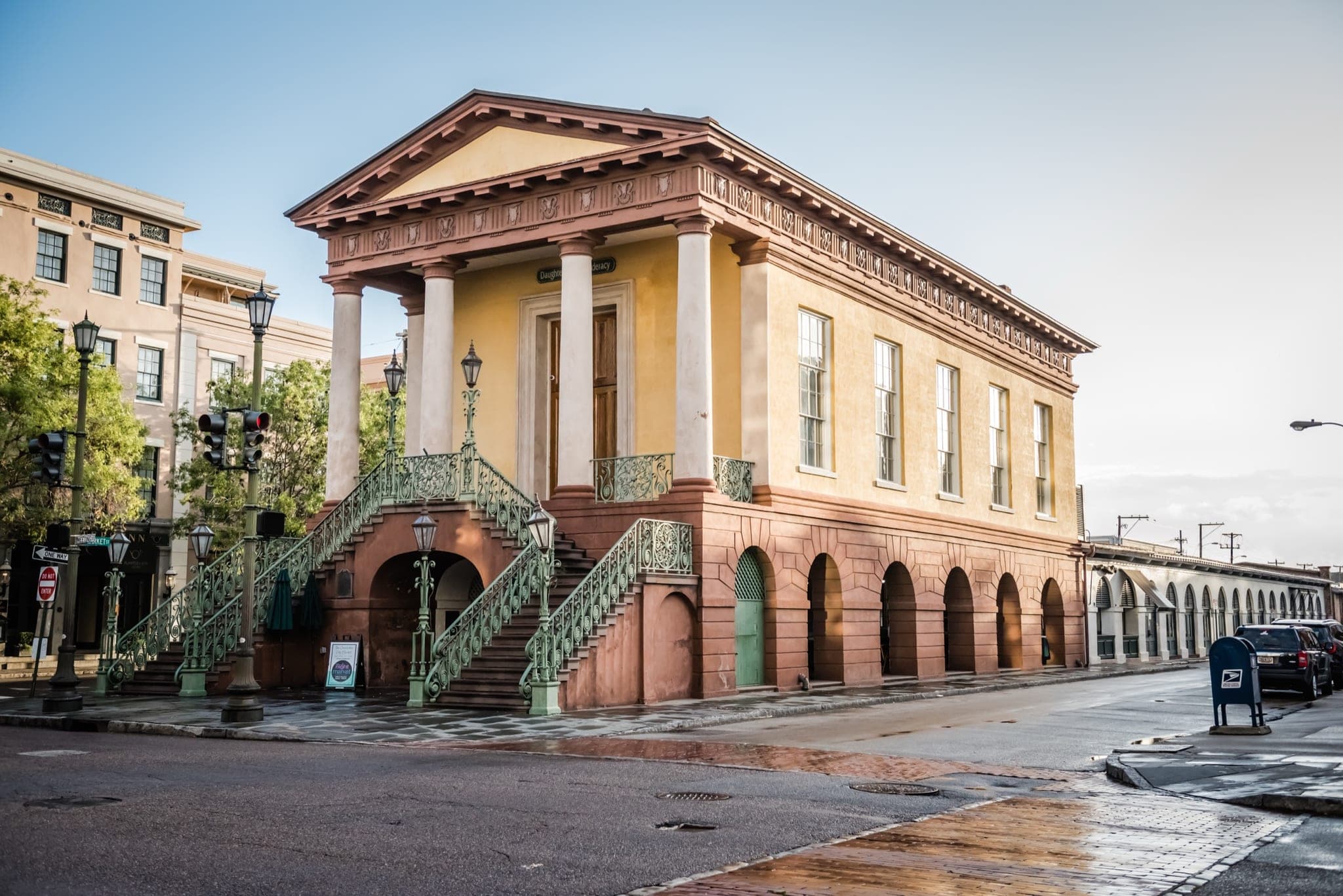
The historic district is compact and walkable. You can see the main sights on foot in a day: Rainbow Row and the Battery, Waterfront Park with its pineapple fountain, King Street for shopping and restaurants, St. Michael's Church, the French Quarter, and the cobblestone streets south of Broad that are some of the most photographed in the United States. A walking tour is a reasonable way to spend two or three hours — the best ones focus on specific themes (architecture, Gullah heritage, food) rather than trying to cover everything.
Practical note: downtown parking is difficult and metered strictly. Park once in a garage and walk, or take a rideshare in and out. Evenings in the historic district are lovely — the light on the old buildings after sunset is part of why people fall in love with the city.
From Charleston Treehouse on Johns Island, downtown is a 15-minute drive.
The Beaches
Charleston has four main beaches, and they aren't interchangeable. Pick based on the kind of day you want.
Folly Beach is the surf-culture beach — laid back, a small boardwalk, fishing pier, casual restaurants on the main strip, and a younger crowd. It is the most energetic of the beaches and the closest to a traditional East Coast beach-town experience. About 25 minutes from the treehouse.
Kiawah Island is the opposite — ten miles of pristine, undeveloped Atlantic beach, quiet, beautiful, excellent for walking and wildlife. Kiawah is the beach for a slower day. Most of the public beach access is at Beachwalker County Park. About 25 minutes from the treehouse.
Sullivan's Island and Isle of Palms are on the other side of the peninsula from Johns Island, about 35 to 45 minutes from the treehouse. Sullivan's is residential and quiet with a couple of excellent restaurants. Isle of Palms has more amenities and a busier beach.
The Lowcountry: Angel Oak, Marsh, and Johns Island
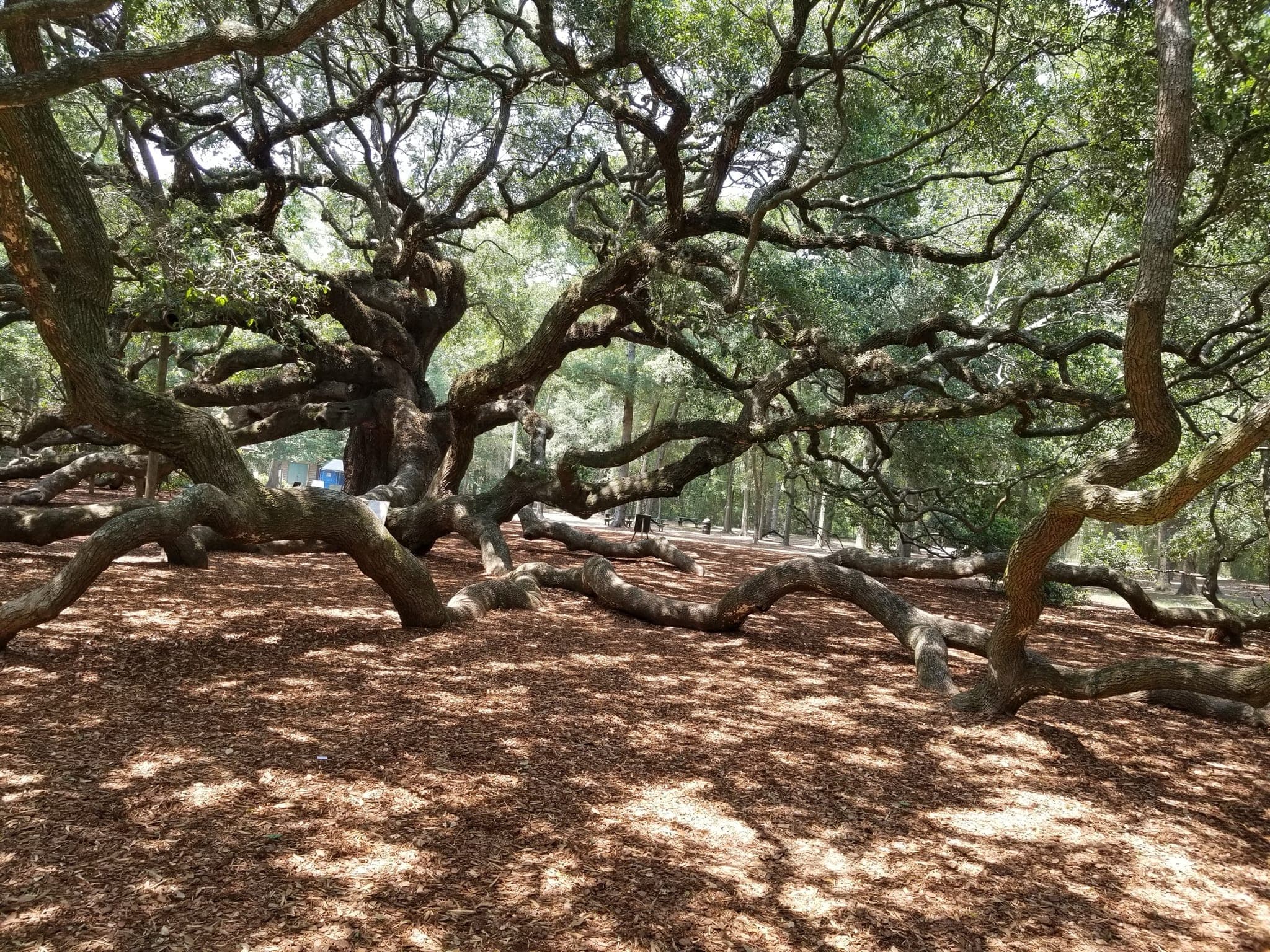
This is the part most visitors skip, and later regret skipping. The Lowcountry comes down to two things: the tidal marsh — vast, grassy, cut by creeks, changing twice a day with the tides — and the ancient live oaks. The most famous of those is the Angel Oak on Johns Island — 400 to 500 years old, a canopy spreading over 17,000 square feet, branches heavy enough to rest on the ground. Admission is free. It's one of the most remarkable natural sights on the East Coast and a 10-minute drive from Charleston Treehouse.
Kayaking and paddleboarding through the tidal creeks is one of the best ways to actually experience the Lowcountry — rentals are available on Johns Island and the surrounding area. For a cultivated version of the same landscape, Magnolia Plantation and Gardens and Middleton Place are well worth a morning. Both offer a serious look at Lowcountry landscape design, along with historical context around the enslaved communities who built them.
See our Johns Island guide for more detail on what the island itself offers — farms, breweries, and small restaurants that most tourists never see.
Food and Drink
Charleston is one of the better food cities in the country, and eating well here is easy. The short version: the high-end destination restaurants in the city (Husk, FIG, Chez Nous, 167 Raw, Peninsula Grill, 82 Queen) are excellent and require reservations. The neighborhood favorites in the West Ashley, James Island, and Johns Island areas (less touristy, easier to walk into) are where you often get the most memorable meals. And the coffee, biscuit, and breakfast scene across the peninsula is unusually strong — Sugar Bakeshop, Harbinger, Callie's Hot Little Biscuit, and Kiss Cafe are among the many worth a morning.
On Johns Island specifically, The Royal Tern, Wild Olive, and Stono Market & Tomato Shed Cafe are all within easy reach of the treehouse, and all are serious restaurants worth a visit. Book ahead on weekends.
Day Trips Worth Making
Mount Pleasant and Boone Hall Plantation. Cross the Ravenel Bridge and you are in Mount Pleasant in 15 minutes — Boone Hall, Shem Creek (best sunset view in the area, with a few dependable restaurants right on the water), and the small downtown area all reward a half-day.
Edisto Island. About an hour south, Edisto is the most undeveloped of the Charleston-area islands — a state park, excellent shelling, a genuinely slow pace. If you want to see what the Lowcountry looked like before any tourism arrived, Edisto is the answer.
Beaufort, SC. A little over an hour south of Charleston, Beaufort is a smaller Lowcountry city with its own historic district, quieter than Charleston and arguably the more photogenic for it. A long day trip, or worth breaking into a two-day add-on for longer visits.
Culture and Festivals
Spoleto Festival USA is the major arts event of the year — 17 days of opera, theater, dance, jazz, and chamber music across venues in the historic district, running from late May into early June. Tickets go fast for the headline performances.
Charleston Wine + Food Festival runs in early March and is a serious food-and-wine event with dozens of ticketed dinners, seminars, and tastings.
Smaller but worth knowing about: oyster roasts through the cooler months (November to February), the Charleston Farmers Market in Marion Square on Saturday mornings through the spring-to-fall season, and any number of neighborhood festivals that locals actually attend. If your trip overlaps with any of these, plan around them.
Themed Trips: Romantic, Bachelorette, Family
Charleston is an unusually good city for specific kinds of trips. Dedicated planning helps — see:
Charleston Romantic Getaway Guide — the full local guide to anniversaries, honeymoons, and private-treehouse weekends.
Charleston Bachelorette Trip Guide — the itinerary-friendly guide to bachelorette weekends that do not feel cookie-cutter.
For seasonal planning, see our Best Time to Visit Charleston guide, and if you are weighing booking direct versus an aggregator, the Charleston Rentals vs. Airbnb comparison.
One Local Recommendation
The best thing most of our guests miss is a sunrise or sunset out on the water or the marsh. A short kayak at low tide, a walk down to the marsh at sunrise with coffee, or a drink on the deck at the treehouse as the sun goes down — the Lowcountry light at the edges of the day is the reason people move here. Build one of those into your trip and you'll understand the area in a way most weekend visitors never do.
Stay on Johns Island
Charleston Treehouse is 15 minutes from downtown, 25 minutes from the beaches, and 10 minutes from the Angel Oak — the closest thing to an ideal base for a full Charleston trip. Marsh views, quiet mornings, and everything else a car-ride away.
Check Availability